A skilled professional over 30 years of clinical experience working with people.
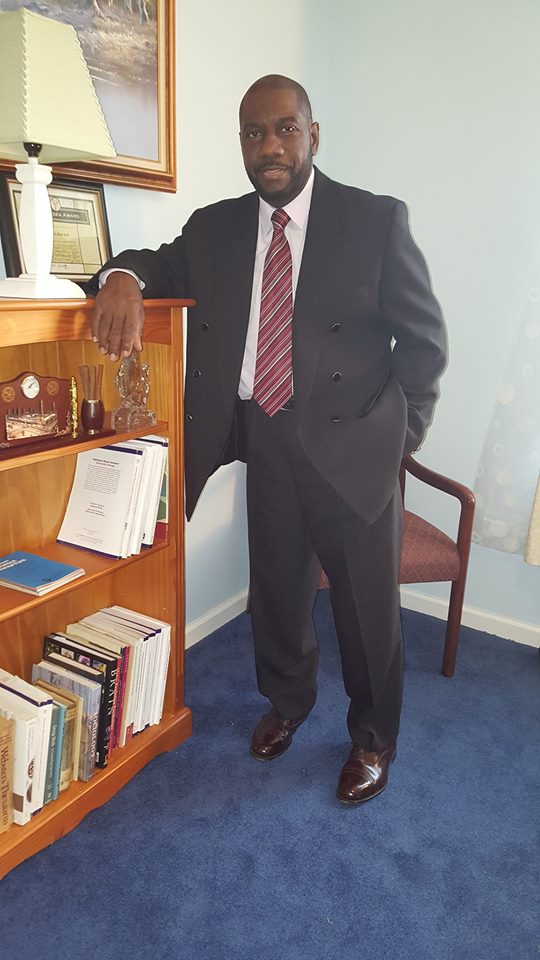
What I do is help restore emotional balance to the emotional cognitive mind. This process is the foundation towards changing negative addictive behaviors and dysfunctional relationships for individuals and families.
- Lecturer
- Therapist
- Consultant
Human Emotions By Khalil Peterkin
Human beings are formed in the wombs of its mothers conceived as an embryo, evolving as a fetus in which the entire developmental process of the unborn is shrouded in a web of emotions. The emotional state of the unborn is the dependent element by which the unborn and the new born rely upon for its comfort and security. Emotionality in its pure natural form is not a product of social cultures.
Emotional states at its core has natural sensitivities of matters that will cause the Unborn, the New Born, the developing Child ,the Adolescent and the Adult to identify matters that make them Happy Compassionate Loving, Trustful, or Sad, Angry, Hateful, Confused and Distrustful
Emotional states determine fundamentally who you are developing to become, it ultimately defines what you will be as a person, it establishes who you are as a personality. Emotional states are closely connected to spiritual states.
Regardless of what ones emotional state is, every Man, Women and Child are endowed with an internal “Light” as the Light Must Be Turned On.
What I do is provide individuals with information in an approach directed towards helping them understand what is going on with them emotionally, as to empower them to express and manage their emotions constructively.
For more information contact me at theliteison@gmail.com.
What Are Addictions?
While many research professionals attribute addictions to outcomes that confer to some type of brain condition or abnormality, it is significant to understand that people are resilient and are equipped with the ability to overcome any type of addiction and live productive contented normal lives.
Addiction is defined as the inability for an individual to control or abstain from behaviors or the use of any type of substance that have shown to be harmful to them physically, mentally, emotionally and spiritually.
Thus, the use or engagements of the addictive object always draw out some type of temporary physical and or an emotional gratification.
While there are many types of addictive behaviors
- Drugs
- Alcohol
- Food
- Sex
And other types of potentially harmful engagements, deep down people want to be at “Peace” and to heal from emotional discomforts.
Every human emotion
- Anger
- Sadness
- Happiness
- Laughter
Has a relational life experience causal factor influencing that emotional feeling or response. The basis of Overcoming addictions is not related to getting the individual to reject the use of the addictive object although that is a significant part of the process.
Rather, the focus is to educate the person in understanding what ones personal relationship would be in the context of that emotional life experience.
Thus, by doing so, we empower the individual to Treat, Heal and rely on their own Inherent Personal Qualities and Strengths to defeat the addictive behaviors.
For more information contact THE LITE IS ON at (theliteison@gmail.com)

Khalil I. Peterkin
MA/MS/CADC
Professional and Academic Bio
- Graduated from Satellite Academy High School in the winter of 1981(NYC)
- Studied undergrad courses in sociology at Long Island University Brooklyn Campus in fall of 1981
- In 1982 became employed with the New York Urban League and played a major role in marketing the first newly formed Child Protection Preventive Services Alternative Program designed to keep families together against the risk of foster care child placement (NYC)
- In 1985 became a private business vendor in Brooklyn and advocated the need for inner city minority private business development.
- In 1990 re-entered the public work force and provided intense counseling for adults effected with mental health, alcoholism and chronic homelessness.
- In 1990 became a Certified NYS resource foster parent that lasted 11 years which resulted in the adoption of 5 special and exceptional needs children.
- 1992 Worked as a NYC welfare caseworker for 8 years.
- 1996 Enrolled in MCNY and graduated with a (BA) in professional studies in 1998 and completed a Master degree program Human Services Admin (MS) graduated 1999.
- From 2000 through 2010 was involved various not for profit agencies conducting tasks that included supported services to homeless families, homeless single adults, incarcerated men, drug prevention education for youths, drug and mental health therapeutic treatment for men and women. In addition had been involved in other community activities such as lecturing on issues related to prison recidivism and community re-entry concerns for convicted felons.
- From 2011 through 2019 was involved in intense professional and academic research activities that disclosed strategies and successfully implemented services and treatment regimen related to empowering adjudicated youths, difficult teen males in foster care, and adult individuals and families affected by the severe opioid epidemic.
- From 2016 through 2019 acquired certification (CADC) (CASAC) in addiction and mental health treatment as well as attained a second Masters (MA) at NCU in addiction and Cognitive Psychology.
- Currently writing a book on (Strategies to combat Depression, Incarceration and Homelessness) amongst African American men.
(Scope and Summary of Bio)
In light of the aforementioned information, what I represent to society is a person who is well equipped with professional and life experience in working with individuals and families that can not necessarily be expressed in written words. For an example my close life interactions with teenagers who were placed in foster care as well and those involved in the criminal justice system exposed me to obtain profound qualitative experiences that grounds me as a solidly endowed figure to educate others on the subject matter explaining the clinical and emotional challenges these teenagers often undergo, and the struggles they contend with seeking to make sense out of their lives. Thus, my experience also provides me with insight towards proposing proven strategies that will help parents become more effective in their parental role even with their own biological children during these sometimes difficult stages of transition from childhood to adulthood.
Another example would be my direct intense years of clinical treatment I provided to convicted felons and substance abusers. There are many professionals who have worked with felons and addicts in forensic settings who have drawn conclusions that such individuals cannot or will not rehabilitate themselves. My involvement with these disenfranchised individuals disputes those conclusions. According to what I have experienced my findings indicate that many of them are psychologically confused and emotionally detached which creates attitudes of embracing defiant oppositional behaviors to social and moral societal standards.
A great deal of this opposition is related to their anger and discontent with one or both parent’s failures to exemplify and dispense emotional security measures and social guidance that they innately know should have been furnished to them by their parents in the early stages of their lives.
The challenge that professional clinicians face is related to whether or not they possess the skills and the motivation to help individuals particularly males talk about the most sensitive matters that effects their emotional well-being. My professional and overall life experience as well as my educational training positions me to be amongst those capable of meeting the challenge to support the improvement of the emotional well-being of such individuals. The focus of my approach includes asserting the virtue of personal patience, and encouraging individuals to self-assess what they deeply feel about themselves and the world that they live in.
 The Lite Is On